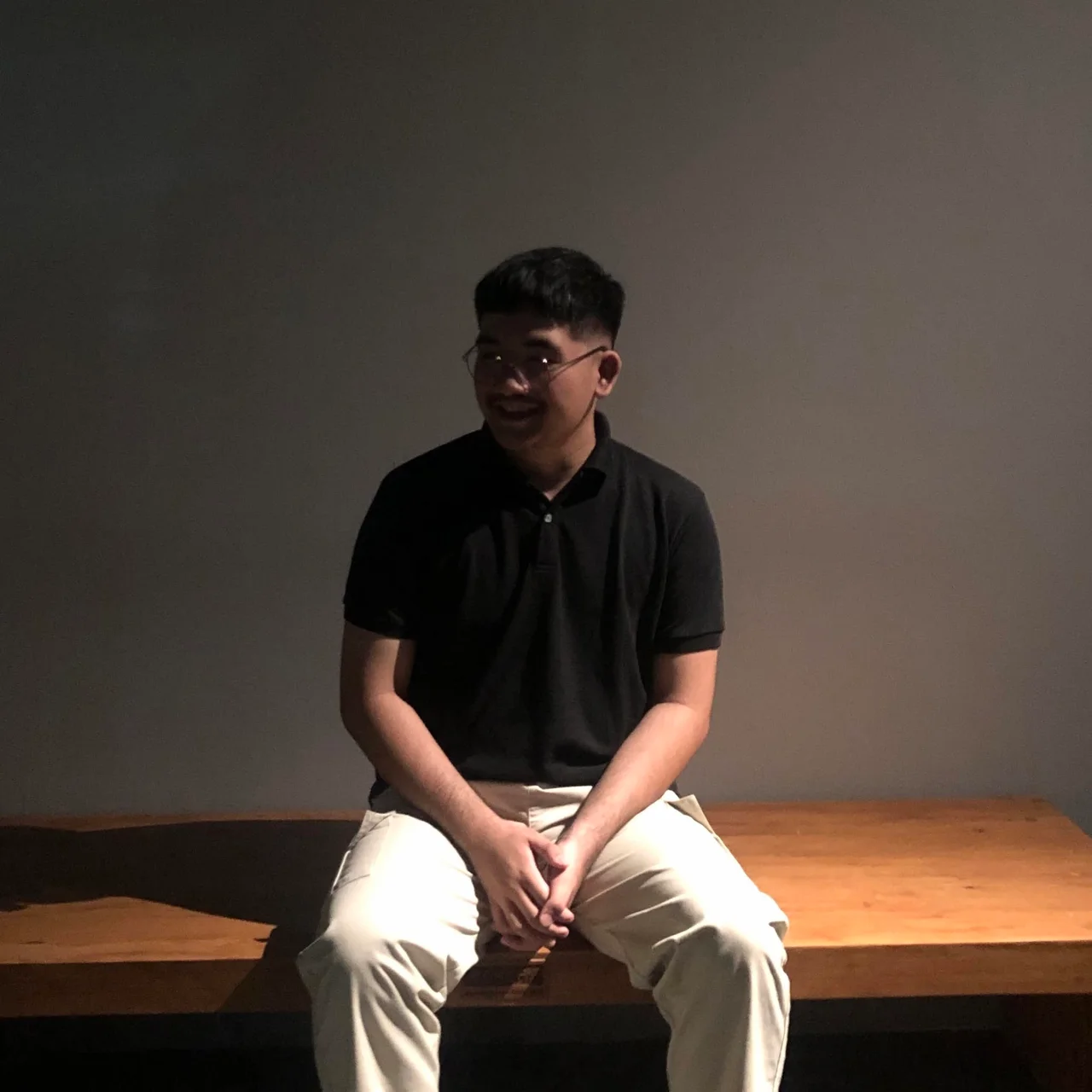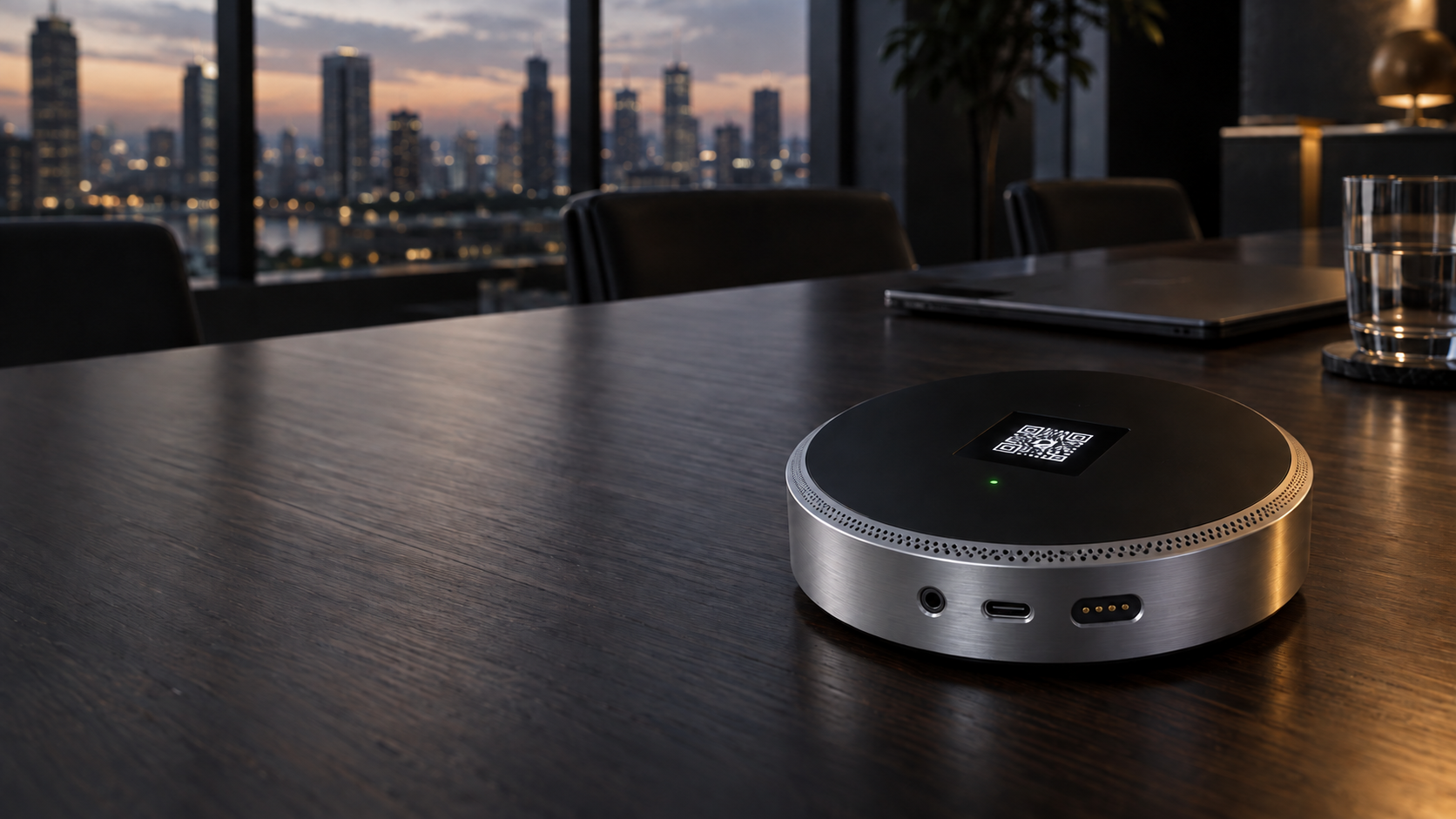
Kinig product concept: a silver and black meeting pod with a QR display and recessed audio, USB C, and accessory ports on a conference table at dusk

Your meeting.Your intelligence.

A private conversation deserves a private record.
Meet Kinig, a meeting pod designed to keep AI local.

Discuss a pilot

Kinig / kee·nig
Filipino for listen.

The best ideas in the room
should stay in your hands.

Client details. Unfinished strategy. The decision that changes everything. Meetings hold information that deserves deliberate control.

Taking notes divides your attention. A recording leaves another hour to replay. And sending sensitive discussions to a cloud service is not always an option.

We envision a better way: one pod on the table, useful notes after the meeting, and your organization in control of the record.

See the intended experience

Small presence.
Considered engineering.

One shared transcriber. A visible recording state. A screen for local access. Every part designed around the room.

Skip the hardware story
MicSpeakerDisplayMic arrayPowerPorts

One meeting.
One shared device.

A quiet presence at the center of the table. Inside, every layer has a role in turning a conversation into a record your company controls.

Scroll to open the pod, follow the signal, and see how the parts could evolve.
First, hear
the whole room.

A perimeter microphone array gives the room one shared pickup point. The highlighted ring is where the conversation enters the pod.

The ring lifts away as a serviceable assembly. Optional satellite microphones could extend capture across a larger table.

Keep the thinking
inside the pod.

The compute module is intended to turn audio into a transcript, decisions, and action items on company controlled hardware.

The board connects to the pod through a removable interface. Upgrade the computing capability while keeping the enclosure and other modules.

An invitation.
Not an open door.

The screen makes the session visible and displays a QR invitation to request the notes. Scanning is not permission by itself.

The host reviews the draft and approves access. A removable display module keeps a damaged screen from retiring the whole pod.

Designed to stay
in service.

A separate power and storage layer sits beneath the compute board. Keeping these parts accessible supports maintenance over the life of the device.

A battery service or storage repair should not require replacing every component. Retention, deletion, and encryption still need to be engineered.

Connections with
room to grow.

Three recessed sockets follow the curve of the aluminum shell: USB C, an audio connection, and a dedicated accessory connector.

Audio
USB C
Accessory

A replaceable interface board would connect power and peripherals without redesigning the entire pod. Final standards and electrical specifications remain open.

Change a part.
Keep the product.

The compute module slides out. Microphone and speaker extensions connect around the pod. The display, pickup ring, power layer, and interface board remain distinct assemblies.

Further ahead: a cartridge with a trained model embodied in specialized silicon. A model upgrade could mean a module upgrade, not a new pod.

Scroll to explore1 / 7

Be in the meeting.
Keep what matters.

Designed to give everyone their attention back, with a clear path from a spoken thought to an approved record.

  1. 01

    Start with everyone aware.

    The host announces the session. The pod makes its recording state visible.

  2. 02

    Let the pod do the first draft.

    Local AI creates a transcript, key decisions, and action items for the host to review.

  3. 03

    Share with the right people.

    Scan the screen to request local access. The host approves who receives the notes.

kinig. Meeting notes

Client strategy session

September 10, 2026 · Meeting room A

Meeting overview

The team aligned on a smaller discovery phase before expanding the client engagement. The revised proposal will focus on two priority workflows.

Key decisions
  • Start with discovery before rollout.
  • Share the revised scope with the client.
  • Review findings at the next meeting.
Draft for host reviewReview the AI output before sharing.
1 / 4
The first draft1 / 6
  1. The pod drafts notes for the host.
  2. The host reviews the output.
  3. A participant requests access.
  4. The host approves sharing.


Private by intention. Local by design.

Bring it where
the work happens.

A shared device for teams whose conversations carry business value.

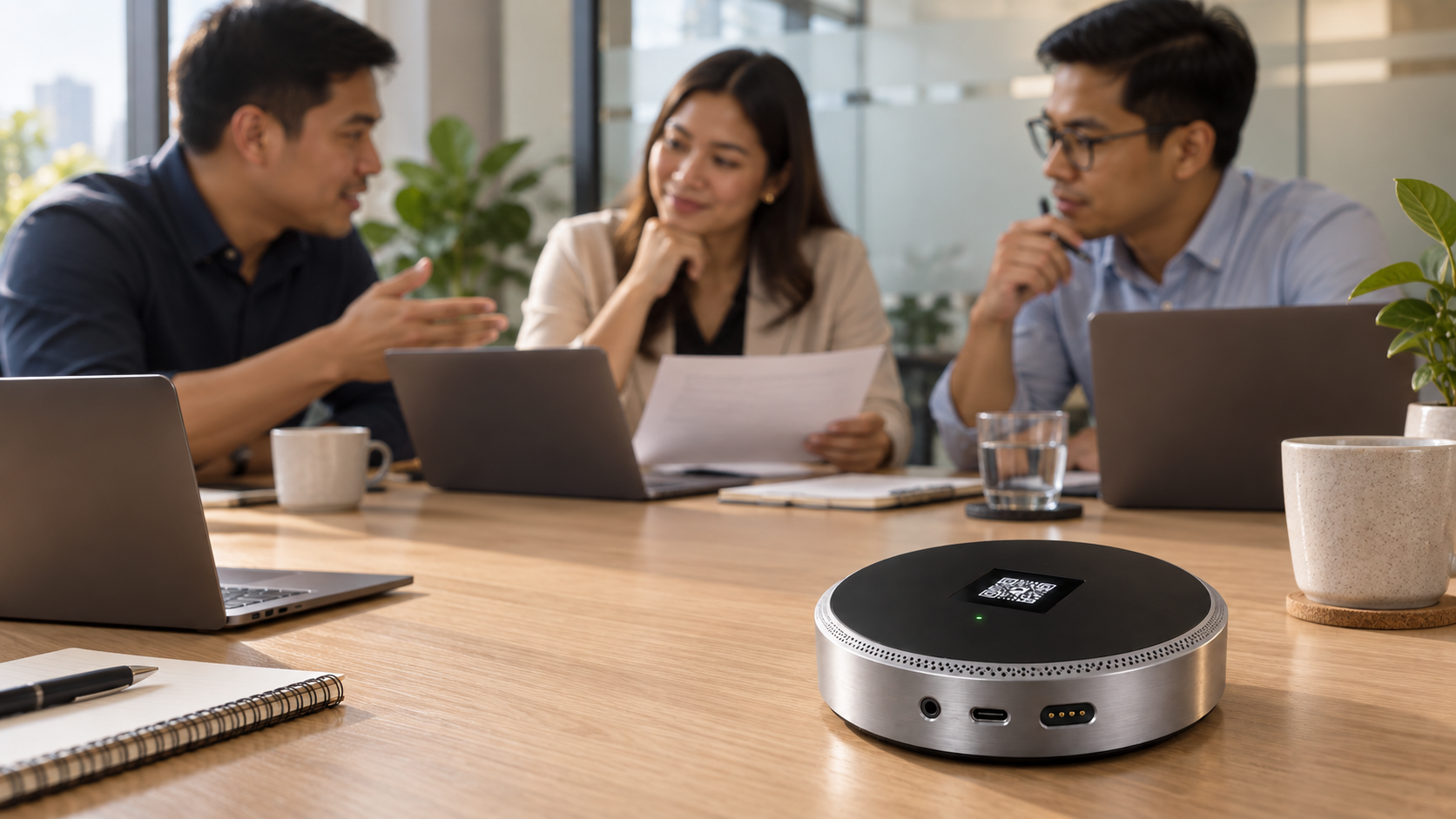
Illustrative client strategy workshop with three colleagues discussing a brief and the same Kinig pod on the table

Keep the context.

For consulting and advisory teams discussing sensitive briefs, client details, and next steps.

Keep the decisions.

For leadership and product teams shaping plans that are not ready to leave the room.

Keep the explanation.

For internal training and handovers where the spoken detail matters as much as the slides.

Your pod.
A longer useful life.

We are exploring a model where companies own their meeting infrastructure and upgrade the parts that need to grow.

Buy or lease the pod.

One device serving a room, with deployment suited to the organization.

Add support when you need it.

Optional setup, maintenance, and help managing a fleet of devices.

Upgrade the capability.

Replaceable compute and future model cartridges, plus extensions for the way your team meets.

Keep the pod.
Change what is possible.

A focused first product. An ambitious modular future.

Now

Prove the
private workflow.

Build an offline proof of concept. Evaluate English and Taglish, note quality, and local delivery.

Next

Build it with
the people using it.

Co design a business pilot. Test useful output, host controls, processing time, and willingness to pay.

Then

More room
to grow.

Explore replaceable compute, microphones, speakers, screens, and ports in a serviceable enclosure.

kinigModel
cartridge

What if the model
was the hardware?

Imagine a cartridge with a trained model embodied in specialized silicon. A new generation of intelligence could mean a new module, while the rest of the pod stays.

Inspired by research into models implemented directly in hardware, including Taalas, with no affiliation. Pocket scale performance, power, cost, and availability remain open engineering questions.

Explore the technical precedent

Different disciplines.
One shared conviction.

Useful technology should give people more room to think. We are a team exploring what that looks like, together.

Bernard Tapiru Jr.

Bernard Tapiru Jr.

Cofounder & CEO

Turning a clear problem into a product worth building. Product direction, customer discovery, and partnerships.

Niccolo Coronel

Niccolo Coronel

Cofounder, AI & Security

Making local intelligence useful and accountable. Model evaluation, inference, and security architecture.

Carl Steven Sumadsad

Carl Steven Sumadsad

Cofounder, Hardware & Silicon

Bringing intelligence into the physical world. Electronics, embedded compute, and power systems.

Lance Benedict Cabrera

Lance Benedict Cabrera

Cofounder, Software Engineering

Connecting the pod to the people around it. Device software, local access, and user experience.

Joshua Miguel Pangilinan

Joshua Miguel Pangilinan

Cofounder, Product Innovation

Giving the idea its physical form. Industrial design, modular mechanisms, and prototyping.

Proposed team roles.

Clarity comes first.

What we intend to build.
What we still need to prove.

Is Kinig available today?

Kinig is a product concept. We are seeking development and pilot partners. The renders and meeting walkthrough show our intended experience, not working hardware. No audio is recorded or processed, and no notes are actually transferred by this page.

Does it need an internet connection?

The core workflow is designed to capture audio, transcribe, and generate notes on the device. Approved notes would transfer over a local connection. Demonstrating this complete offline workflow is our first engineering milestone.

Can anyone scan the QR code and get the notes?

No. In the proposed workflow, the QR code starts a local access request. The host approves participants before sharing reviewed notes. The code itself is not a substitute for authorization.

What happens to the original recording?

Our intended design gives the organization control over access, retention, and deletion on its hardware. Those controls, including handling a lost device, must be engineered and tested before a pilot.

Will it understand English and Taglish?

Both are evaluation targets. We plan to measure transcription accuracy separately and test whether generated decisions and action items reflect the discussion. We have no measured accuracy to report yet.

Why build a device instead of another app?

A shared pod could combine deliberate microphone placement, company controlled processing, and a consistent meeting workflow. A pilot must establish whether that combination offers enough value over existing apps and local software.

How will the modular upgrades work?

Our roadmap starts with serviceable hardware and a replaceable compute module. Longer term, we want to explore cartridges containing models embodied in specialized silicon. Microphones, speakers, screens, and ports are further extension concepts.

What will it cost?

Pricing is open. We are exploring device sales or leases, support, and modular upgrades. Component costing and conversations with prospective buyers will inform the offer.

A place at
your table.

We are looking for businesses willing to help define what private meeting intelligence should become.

Download the pilot brief